
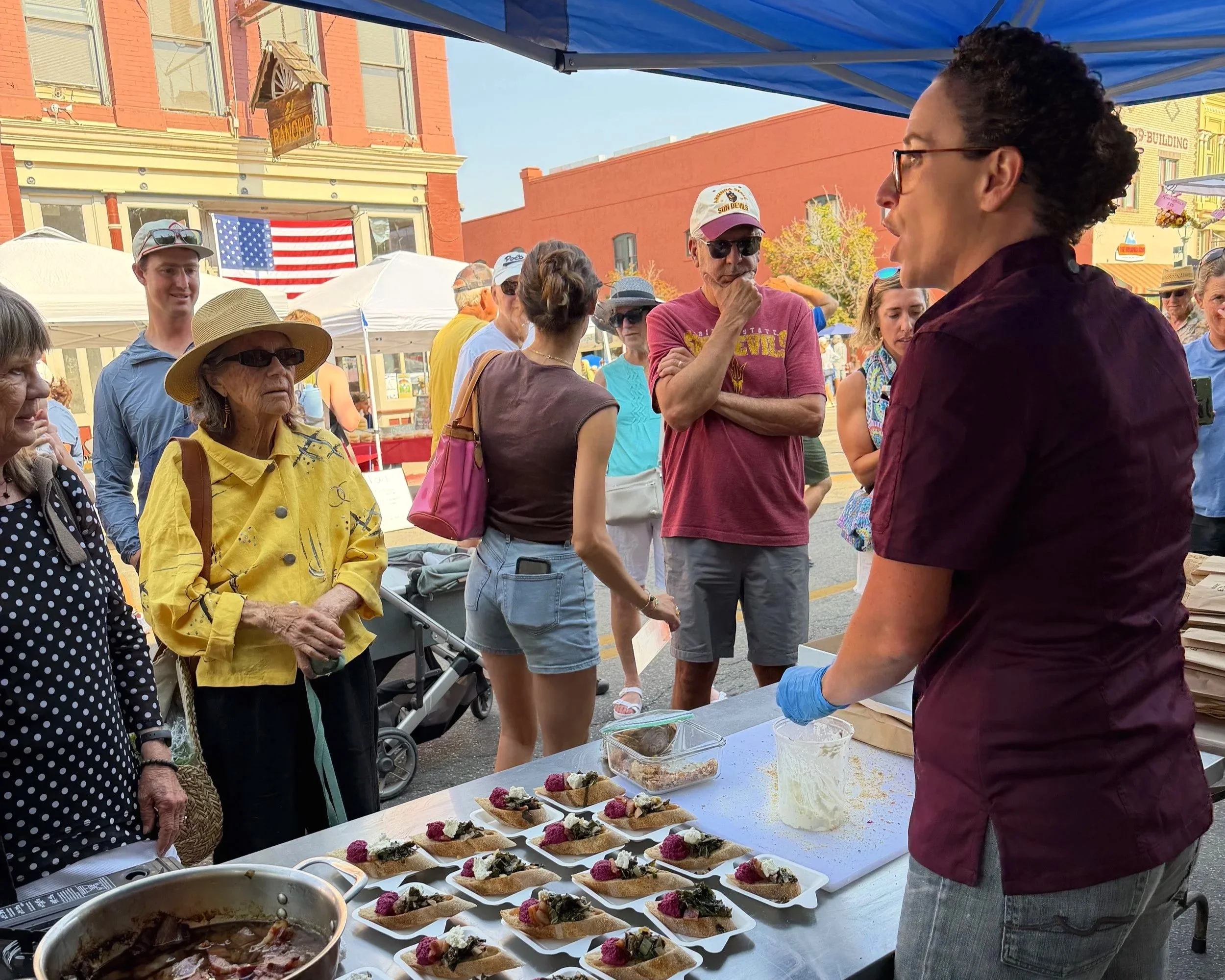

EsoTerra is North America's highest-elevation cidery, crafting small-batch ciders and wines that celebrate the flavors of the Four Corners region. Chef/Owner Elizabeth Philbrick is passionate about cooking with seasonal, locally grown ingredients and believes that the best meals begin with what is fresh and available right now.
Today's demonstration features a Beet & Greens Bite, showcasing beautiful produce from the Durango Farmers Market. Elizabeth hopes to inspire home cooks to feel more confident preparing seasonal vegetables and adapting recipes based on what's available each week. She'll also share simple techniques for balancing flavors and making the most of fresh market ingredients.
Whether you're discovering a new vegetable, meeting your local farmers, or trying a new recipe at home, cooking with local ingredients is a delicious way to support our regional food system.
Be sure to visit EsoTerra Cider & Wines to learn more about their handcrafted ciders, seasonal offerings, private events, and catering services.
Beet Romesco Crostini with Sautéed Greens, Goat Cheese & Crispy Pancetta
Toasted baguette layered with a roasted beet romesco (built the way Herbfarm makes their roasted red pepper hazelnut sauce), nested sautéed greens, goat cheese, crisped pancetta, and a finish of smoked onion flakes.
Yield: about 24–30 crostini (2 baguettes)
1. Roast the Beets (Romesco Base) This mirrors how the peppers are handled for a classic Herbfarm-style romesco — roasted until soft and lightly caramelized, then blended warm. Preheat oven to 400°F. Toss the 1 lb beets (or carrots) with a drizzle of the olive oil, kosher salt, and black pepper. Wrap tightly in foil (or place in a covered roasting dish) and roast 45–60 minutes, until a knife slides in with no resistance. Let cool just until safe to handle, then rub/peel the skins off while still warm — they'll slip off easily. Roughly chop.
2. Toast the Nuts Toast the 1/3 C nuts in a dry skillet or 350°F oven for 5–8 minutes, stirring or shaking often, until fragrant and lightly golden. Watch closely — they go from toasted to burnt fast. Let cool slightly.
3. Build the Romesco In a food processor, combine the roasted beets, toasted nuts, garlic cloves, sherry vinegar, chopped rosemary, marjoram, and a pinch of red pepper flakes. Pulse to break everything down, then, with the motor running, stream in the remaining olive oil until the sauce comes together — aim for the classic romesco texture: mostly smooth with a little body and bite left in it, not a purée. Season to taste with kosher salt and black pepper. Set aside at room temperature (romesco is traditionally served this way, not hot).
4. Toast the Baguette Slice the 2 baguettes on the diagonal into 1/2-inch pieces. Brush lightly with olive oil, arrange on a sheet pan, and toast at 400°F for 6–8 minutes, flipping once, until golden and crisp at the edges but still with a little give in the center.
5. Sauté the Greens Halve and thinly slice the sweet yellow onion. Strip the kale and chard leaves from their stems; stems can be finely chopped and sautéed along with the onion, or discarded. Melt the 2 Tbs butter in a wide skillet over medium heat. Add the onion and a pinch of salt; cook, stirring occasionally, until soft and just beginning to turn golden, 8–10 minutes. Add the kale and chard in batches, letting each addition wilt down before adding more. Cook until fully tender, 5–7 minutes total. Season with salt to taste. Keep warm. 6. Crisp the Pancetta Cook the pancetta (or bacon) in a dry skillet over medium heat until rendered and crisp. Transfer to a paper towel–lined plate; once cool, crumble or finely chop into small bits.
7. Assemble Build each crostini in this order: Toasted baguette slice as the base. A spoonful of beet romesco, spread to the edges. A small nest of sautéed greens on top of the romesco. A light sprinkle of goat cheese over the greens. A few crumbles of crisped pancetta. Finish with a pinch of smoked onion flakes over the top. Serve at room temperature or lightly warm.